A percentage calculator is a simple but useful mathematical tool that helps people calculate percentages quickly and accurately. Percentages are used in many parts of everyday life, including shopping, education, finance, business, statistics, health, and personal budgeting.
A percentage calculator is a simple but useful mathematical tool that helps people calculate percentages quickly and accurately. Percentages are used in many parts of everyday life, including shopping, education, finance, business, statistics, health, and personal budgeting. Although calculating percentages manually is not difficult, a percentage calculator can save time and reduce the possibility of mistakes, especially when dealing with large or complicated numbers.
The word “percentage” means “per hundred.” A percentage expresses a number as a fraction of 100 and is represented by the symbol %. For example, 25% means 25 out of 100, or 25/100. It can also be written as a decimal: 0.25.
The basic percentage formula is:
Percentage = (Part ÷ Whole) × 100
For example, if a student gets 45 marks out of 60, the percentage is:
(45 ÷ 60) × 100 = 75%
Therefore, the student scored 75%.
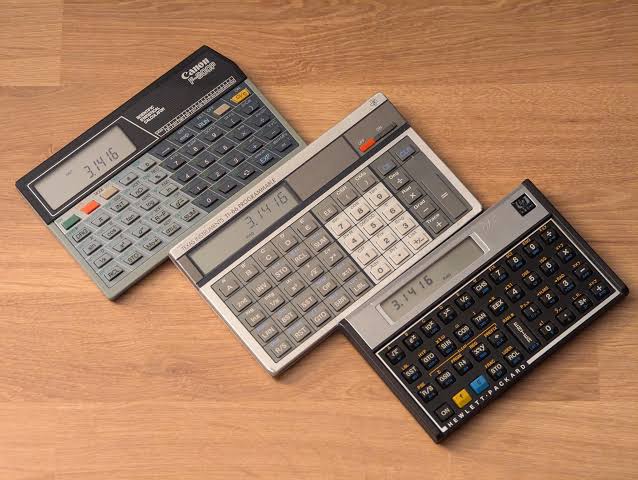
A percentage calculator is a digital tool that performs percentage calculations automatically. Instead of doing the mathematical operations manually, users enter the required numbers, and the calculator provides the answer.
A typical percentage calculator can answer several common questions, such as:
These functions make percentage calculators useful for students, shoppers, employees, business owners, and many other people.
One of the most common uses of a percentage calculator is finding a particular percentage of a number.
The formula is:
Percentage value = (Percentage ÷ 100) × Number
For example, suppose you want to calculate 20% of 500.
(20 ÷ 100) × 500 = 100
Therefore, 20% of 500 is 100.
This calculation is frequently used when calculating discounts, taxes, commissions, tips, and interest.

Another common calculation is determining what percentage one number represents of another.
The formula is:
Percentage = (Part ÷ Whole) × 100
For example, if a company has 200 employees and 50 of them work remotely:
(50 ÷ 200) × 100 = 25%
Therefore, 25% of the employees work remotely.
Students can use the same formula to calculate exam scores. If someone answers 42 questions correctly out of 50:
(42 ÷ 50) × 100 = 84%
The student’s score is therefore 84%.
Percentage calculators are also useful for measuring increases.
The formula is:
Percentage Increase = [(New Value − Original Value) ÷ Original Value] × 100
For example, if the price of a product increases from $100 to $120:
[(120 − 100) ÷ 100] × 100 = 20%
The price increased by 20%.
Percentage increase calculations are commonly used for salaries, prices, investments, population figures, sales, and business growth.
A percentage calculator can also determine how much a value has decreased.
The formula is:
Percentage Decrease = [(Original Value − New Value) ÷ Original Value] × 100
For example, if a product’s price falls from $200 to $150:
[(200 − 150) ÷ 200] × 100 = 25%
The price decreased by 25%.
This calculation is especially useful when comparing sale prices, expenses, revenues, and other changing values.
Percentage calculations are extremely common when shopping. Stores frequently offer discounts such as 10%, 25%, 40%, or 50%.
Suppose a jacket costs $80 and has a 25% discount.
First, calculate the discount:
25% of $80 = $20
Then subtract the discount:
$80 − $20 = $60
The final price is $60, before any applicable taxes or additional charges.
A percentage calculator makes these calculations much faster, particularly when comparing multiple products.
Students regularly use percentages to understand academic performance. Exam results, attendance rates, assignment scores, and grade calculations often involve percentages.
For example, if a student attends 90 days out of 100 school days:
(90 ÷ 100) × 100 = 90%
The student’s attendance rate is 90%.
Percentage calculators can also help students check their answers and understand how marks translate into percentages. However, students should still understand the underlying formula rather than relying entirely on a calculator.
Percentages are particularly important in financial calculations. Interest rates, investment returns, inflation, taxes, loan costs, and savings frequently involve percentages.
For example, if $1,000 earns 5% simple interest for one year:
5% of $1,000 = $50
The interest is $50, assuming the stated rate and calculation method apply.
Financial percentage calculations can become more complicated when compound interest, changing rates, or multiple periods are involved. In such situations, users should understand the specific financial formula being applied rather than assuming that a basic percentage calculation is sufficient.
Businesses use percentages to measure profit margins, sales growth, discounts, commissions, expenses, and market statistics.
For example, if a business earns $10,000 in revenue and spends $7,000 on costs, its gross difference is $3,000. Depending on the accounting context, a business can use percentage calculations to determine relevant margins or changes in revenue and expenses.
Businesses also use percentage calculations to compare performance over different months or years. This allows managers to understand whether sales, costs, or profits have changed and by how much.
There are several advantages to using a percentage calculator.
First, it saves time. A calculation that might require several manual steps can often be completed within seconds.
Second, it reduces arithmetic errors. Entering the correct numbers into a calculator can be easier than performing several calculations manually.
Third, it is convenient. Online percentage calculators can usually be accessed from computers, tablets, and smartphones.
Fourth, it helps users understand results. Many calculators display the formula or intermediate values, making it easier to understand how the final answer was produced.
Although percentage calculators are convenient, understanding percentages remains important. A calculator can produce an incorrect result if the user enters the wrong numbers or chooses the wrong type of calculation.
For example, a 20% increase followed by a 20% decrease does not return a value to its original amount. If the original value is 100, a 20% increase makes it 120. A 20% decrease from 120 is 24, leaving 96.
This example shows why understanding percentage concepts is useful even when using a calculator.
A percentage calculator is a practical tool for performing percentage calculations quickly and accurately. It can help calculate discounts, exam scores, increases, decreases, financial figures, business statistics, and many other everyday values.
The most important formulas involve finding a percentage of a number, determining what percentage one number represents of another, and calculating percentage increases or decreases. While calculators make these operations easier, learning the basic principles of percentages allows users to understand their results and avoid entering incorrect information.
Whether used by a student checking an exam score, a shopper calculating a discount, a worker comparing salary changes, or a business owner analyzing financial figures, a percentage calculator provides a convenient way to work with one of the most commonly used mathematical concepts in everyday life.